
If you own or manage a commercial building in North Dakota, your fire alarm system needs to be inspected on a regular schedule. Most building owners don’t think about this until they fail an inspection, get cited by the fire marshal, or find out their insurance won’t cover a claim because their system wasn’t maintained.
This guide covers what North Dakota requires, how often your system needs testing, what inspectors actually look for, and the most common reasons buildings fail.
Does Your Building Need Fire Alarm Inspections?
If your building has a fire alarm system, the answer is yes. North Dakota follows the National Fire Protection Association’s NFPA 72 standard (the 2022 edition is currently adopted as the North Dakota Fire Alarm Code). NFPA 72 covers fire alarm design, installation, testing, inspection, and maintenance.
The North Dakota Insurance Department and the State Fire Marshal’s office oversee compliance. Commercial buildings, schools, healthcare facilities, places of worship, and multi-unit residential buildings all fall under these requirements.
If your building has a fire alarm control panel, smoke detectors, heat detectors, pull stations, or notification appliances (horns and strobes), you are responsible for keeping that system inspected and documented.
How Often Does Your Fire Alarm System Need Inspection?
NFPA 72 Chapter 14 lays out a tiered schedule. Different components require different inspection intervals.
Monthly: Your fire alarm control panel should be visually inspected every month. Check for trouble signals, warning lights, and battery condition. If your system uses an automatic dialer to communicate with a monitoring center, that connection should be tested monthly as well.
Semi-annually: Smoke detectors, heat detectors, duct detectors, manual pull stations, and notification appliances (horns, strobes, speakers) all require a visual inspection every six months. Battery load testing and waterflow alarm devices also fall on a semi-annual schedule.
Annually: A full functional test of the entire system is required once a year. This means a certified technician physically tests every smoke detector, heat detector, pull station, and notification appliance in the building. The control panel, communication pathways, and backup power are all verified under test conditions.
Every two years: Smoke detectors must have their sensitivity tested within one year of installation, then every two years after that. If a detector passes two consecutive sensitivity tests, the interval can extend to a maximum of five years. Sensitivity testing requires a calibrated instrument, not just a can of test spray.
What Do Inspectors Look For?
A fire alarm inspection is not a quick walk-through. The inspector or certified technician will check every component in the system. Here is what they evaluate:
Fire Alarm Control Panel (FACP): The panel should be free of trouble signals, ground faults, or error codes. The inspector will verify that the panel communicates properly with the monitoring station and that all zones are programmed correctly.
Smoke and Heat Detectors: Each detector is tested to confirm it activates and sends the correct signal to the panel. Detectors covered in dust, paint, or debris will fail.
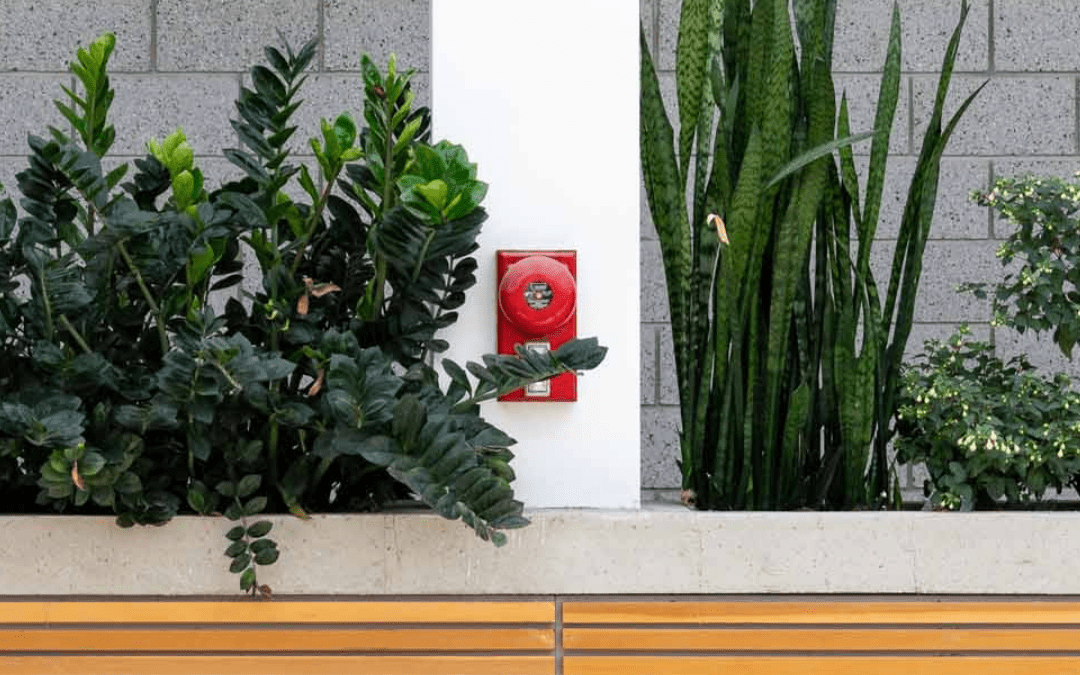
Manual Pull Stations: Every pull station is tested to verify it sends an alarm signal to the panel. Pull stations that are blocked by furniture, equipment, or signage will be flagged.
Notification Appliances: Horns, strobes, and speakers must activate and produce the correct output. Alarm sounders need to meet minimum decibel levels throughout the building. If a horn is muffled by a drop ceiling or blocked by shelving, it fails.
Backup Batteries: Batteries are tested under load, not just checked visually. Even batteries that appear fine can fail under testing conditions. Most backup batteries need replacement every three to five years.
Communication Pathways: The system’s connection to the monitoring center is verified. If your system uses a phone line, cellular communicator, or IP connection, the inspector confirms that alarm signals reach the monitoring station within the required time frame.
Documentation: The inspector will ask for records of previous inspections, testing, and any repairs or modifications. NFPA 72 requires you to keep these records on file.
The Most Common Reasons Buildings Fail
After 30 years of inspecting and servicing fire alarm systems across North Dakota, we see the same problems over and over.
Dead or weak batteries. This is the single most common failure. Backup batteries degrade over time, and many building owners never replace them until they fail a test. A simple battery replacement every three to five years prevents this.
Blocked or obstructed devices. Pull stations hidden behind vending machines. Strobes covered by banners. Smoke detectors painted over during a renovation. If a device can’t be seen, reached, or isn’t exposed to open air, it will fail inspection.
Missing documentation. You had the inspection done last year, but nobody kept the paperwork. Inspectors need to see records of previous tests, corrective actions, and any system modifications. No records means no proof of compliance.
Dust and debris on detectors. Smoke detectors in warehouses, shops, and construction environments accumulate dust that interferes with their sensors. Regular cleaning keeps detectors within their sensitivity range.
Outdated or recalled equipment. Older smoke detectors and sprinkler heads may no longer meet current code requirements. Some models have been recalled by manufacturers. If your system hasn’t been updated in 15 or 20 years, components may need replacement.
Communication path failures. If your monitoring connection relies on a landline phone line that’s been disconnected or a cellular communicator with a weak signal, the system can’t alert emergency responders. This is an automatic failure.
What Happens If You Fail?
A failed fire alarm inspection is not the end of the world, but it does require action. The inspector will document the deficiencies and give you a timeline to correct them. Depending on the severity, you may face re-inspection fees, fines from the fire marshal, or issues with your insurance coverage.
In serious cases, a building can be ordered to reduce occupancy or shut down until the system is brought into compliance.
The best approach is to avoid the failure in the first place. Schedule your annual inspection proactively, replace batteries on a regular cycle, keep your documentation current, and address trouble signals on your panel as soon as they appear.
How NewVision Security Can Help
NewVision Security inspects, installs, and services fire alarm systems for commercial buildings across North Dakota and South Dakota. Our technicians are factory-certified and trained on NFPA 72 requirements. We handle everything from annual inspections and sensitivity testing to full system upgrades.
If your building is due for an inspection, or if you’re not sure when your system was last tested, give us a call. We’ll review your system, identify any issues, and make sure you’re in compliance before the fire marshal shows up.
Request a free fire alarm inspection quote or call us at 701-222-8888. We have offices in Bismarck, Fargo, Dickinson, and Rapid City.